I have been playing the game Cashflow by Robert Kiyosaki - NYT Best Seller author of the book "Rich Dad Poor Dad". There are so many insights in that book and the succeeding books that it peers into building financial literacy and the game of money being played from the smallest person to the largest corporations and countries. I have been playing for several years now and I host a club in one of the metro NYC areas.
What I have learned is:
* How to recongnize a good or bad deal.
* What is an asset and what is a liability.
* How to read a basic financial statement.
* How abundant the opportunities are out there to create wealth.
* How to communicate with others to joint venture or negotiate favorable terms.
* When to leverage and when not to leverage.
* What are some of the challenges I have to attain wealth.
There are many more insights that I have learned and implement in real life as I take some of the principles and apply to real life and back to the game. I have played well over a hundred games and I learn about myself and others through it. I have also played with people who are advanced in real life and proceed to continue to learn through it.
In addition, I have hosted the game many times as I am self fulfilled when sharing my knowledge to others. I have many times found people say how interesting or something they didn't realize or how much they learned when playing when I am hosting / teaching. Right now I don't have as much time to do it and also I am aiming to build a stronger foundation and core to the group so I collaborated with another member to systematize the hosting. It should be very interesting work.
If you haven't yet I suggest you purchase the game and begin to learn about yourself and how to build wealth.
Updates:
Friday January 20, 2006 Cashflow Session
Something to share about yesterday's meeting.
The last few months we have received a sporadic few people who are inconsistent in coming to play the cashflow games. I believe it is due to the energy that the group has dwindled to. Inconsistent focus and commitment to one's inner truth.
The core members have been discussing changing the group dynamics with the possibilty of closing the group to other newcomers and making it into a MASTERMIND or investment club to enable the core members to focus on improving each other. In addtion, we have various other cashflow groups that just play the game just to play it without regards to implementing the philosophy in real life and other larger groups that are doing it in real life.
So yesterday we didn't see a large turn out of people so we were going to move forward and discuss about how to actualize our dreams in real life with tangible action steps.
In less than a few minutes, 3 newcomers joined us. 2 of which said they were creating an investment club and saw we were playing the game (they played frequently on the egame and several times on the board game). 1 came once and that was a few months ago.
Fast forward after 2.5 hrs and the reactions are: "wow", "I never saw that before", "I have to come back", "This is great", "There is so much information that I am overwhelmed in a good way", etc....
The newcomers were glad that there were people who were generous to be open and give back to others.
A few things at random that floated in my mind:
* It is good to give back to the community. I always felt that it is possibly ego driven but I enjoy sharing what I know.
* The hosting system that we created needs more tweaking but we will have a hosting system tweaked out in the next few weeks.
* Keeping the group open gives new blood and to feel that wonder of seeing the game new is fun.
* We are growing our brothers and sisters in life. I totally respect others who are serious about their lives and want to live to the fullest.
* Not all are ready to embark on the journey as many have said they will come but they don't come.
* Be inspired by ourselves first. This will enroll and inspire others.
________________________________________________________________________
Articles
Chicago Tribune 1/17/2006 (you may need to register for free on this site)
http://www.chicagotribune.com/news/nationworld/chi-0601170164jan17,1,2379933.story?page=1&ctrack=1&cset=true
Saturday, January 14, 2006
Saturday, January 07, 2006
Who is Time's 2005 Persons of the Year?
Time has named Bono, Bill and Melinda gates to be 2005 Persons of the Year. The whole article is located here:
http://www.time.com/time/magazine/article/0,9171,1142278,00.html
http://www.time.com/time/magazine/article/0,9171,1142278,00.html
Persons of the Year
By NANCY GIBBSPosted Monday, Dec. 19, 2005
These are not the people you expect to come to the rescue. Rock stars are designed to be shiny, shallow creatures, furloughed from reality for all time. Billionaires are even more removed, nestled atop fantastic wealth where they never again have to place their own calls or defrost dinner or fly commercial. So Bono spends several thousand dollars at a restaurant for a nice Pinot Noir, and Bill Gates, the great predator of the Internet age, has a trampoline room in his $100 million house. It makes you think that if these guys can decide to make it their mission to save the world, partner with people they would never otherwise meet, care about causes that are not sexy or dignified in the ways that celebrities normally require, then no one really has a good excuse anymore for just staying on the sidelines and watching.
Such is the nature of Bono's fame that just about everyone in the world wants to meet him--except for the richest man in the world, who thought it would be a waste of time. "World health is immensely complicated," says Gates, recalling that first encounter in 2002. "It doesn't really boil down to a 'Let's be nice' analysis. So I thought a meeting wouldn't be all that valuable."
It took about three minutes with Bono for Gates to change his mind. Bill and his wife Melinda, another computer nerd turned poverty warrior, love facts and data with a tenderness most people reserve for their children, and Bono was hurling metrics across the table as fast as they could keep up. "He was every bit the geek that we are," says Gates Foundation chief Patty Stonesifer, who helped broker that first summit. "He just happens to be a geek who is a fantastic musician."
And so another alliance was born: unlikely, unsentimental, hard nosed, clear eyed and dead set on driving poverty into history. The rocker's job is to be raucous, grab our attention. The engineers' job is to make things work. 2005 is the year they turned the corner, when Bono charmed and bullied and morally blackmailed the leaders of the world's richest countries into forgiving $40 billion in debt owed by the poorest; now those countries can spend the money on health and schools rather than interest payments--and have no more excuses for not doing so. The Gateses, having built the world's biggest charity, with a $29 billion endowment, spent the year giving more money away faster than anyone ever has, including nearly half a billion dollars for the Grand Challenges, in which they asked the very best brains in the world how they would solve a huge problem, like inventing a vaccine that needs no needles and no refrigeration, if they had the money to do it.
It would be easy to watch the alliance in action and imagine the division of labor: head and heart, business and culture; one side brings the money, the other side the buzz. But like many great teams, this one is more than the sum of its symbols. Apart from his music stardom, Bono is a busy capitalist (he's a named partner in a $2 billion private equity firm), moves in political circles like a very charming shark, aptly named his organization DATA (debt, AIDS, trade, Africa) to capture both the breadth of his ambitions and the depth of his research. Meanwhile, you could watch Bill and Melinda coolly calculate how many lives will be saved by each billion they spend and miss how impassioned they are about the suffering they have seen. "He's changing the world twice," says Bono of Bill. "And the second act for Bill Gates may be the one that history regards more."
For being shrewd about doing good, for rewiring politics and re-engineering justice, for making mercy smarter and hope strategic and then daring the rest of us to follow, Bill and Melinda Gates and Bono are TIME's Persons of the Year.
As it happens, they have arrived at the right time, as America stirs itself awake from the dreamy indifference with which the world's poor have forever been treated. In ordinary times, we give when it's easy: a gesture, a reflex, a salve to conscience. The entreaties come on late-night TV from well-meaning but long-discarded celebrities who cuddle with big-eyed children and appeal to pity and guilt. Maybe we send off a check, hope it will help someone somewhere stay alive for another day. That is not the model for the current crusaders or the message for these extraordinary times.
This was already a year that redefined generosity. Americans gave more money to tsunami relief, more than $1.6 billion, than to any overseas mission ever before. The Hurricane Season from Hell brought another outpouring of money and time and water bottles and socks and coats and offers of refuge, some $2.7 billion so far. The public failure of government to manage disaster became the political story of the year. But the private response of individuals, from every last lemonade stand to every mitten drive, is the human story of 2005.
"Katrina created one tragedy and revealed another," Melinda Gates said in a speech after the hurricane. "We have to address the inequities that were not created by the hurricanes but exposed by them. We have to ensure that people have the opportunity to make the most of their lives." That just about captures the larger mission she and her husband have embraced. In the poorest countries, every day is as deadly as a hurricane. Malaria kills two African children a minute, round the clock. In that minute a woman dies from complications during pregnancy, nine people get infected with HIV, three people die of TB. A vast host of aid workers and agencies and national governments and international organizations have struggled for years to get ahead of the problem but often fell behind. The task was too big, too complicated. There was no one in charge, no consensus about what to do first and never enough money to do it. In Muslim parts of Ethiopia, aid workers can't talk to teenage girls about condoms to prevent AIDS; but in Tanzania they're encouraged to. How you cut an umbilical cord can determine whether a baby risks a fatal infection, but every culture has its own traditions. They cut with a coin for luck in Nepal and a stone in Bolivia, where they think if you use a razor blade the child will grow up to be a thief. There is no one solution to fit all countries, and so the model the Gates Foundation and Bono have embraced pulls in everyone, at every level. Think globally. Act carefully. Prove what works. Then use whatever levers you have to get it done.
The challenge of "stupid poverty"--the people who die for want of a $2 pill because they live on $1 a day--was enough to draw Gates away from Microsoft years before he intended to shift his focus from making money to giving it away. He and Melinda looked around and recognized a systems failure. "Those lives were being treated as if they weren't valuable," Gates told FORTUNE in 2002. "Well, when you have the resources that could make a very big impact, you can't just say to yourself, 'O.K., when I'm 60, I'll get around to that. Stand by.'"
There have always been rich and famous people who feel the call to "give back," which is where big marble buildings and opera houses come from. But Bill and Melinda didn't set out to win any prizes--or friends. "They've gone into international health," says Paul Farmer, a public-health pioneer, "and said, 'What, are you guys kidding? Is this the best you can do?'" Gates' standards are shaping the charitable marketplace as he has the software universe. "He wants to know where every penny goes," says Bono, whose DATA got off the ground with a Gates Foundation grant. "Not because those pennies mean so much to him, but because he's demanding efficiency." His rigor has been a blessing to everyone--not least of all Bono, who was at particular risk of not being taken seriously, just another guilty white guy pestering people for more money without focusing on where it goes. "When an Irish rock star starts talking about it, people go, yeah, you're paid to be indulged and have these ideas," Bono says. "But when Bill Gates says you can fix malaria in 10 years, they know he's done a few spreadsheets."
The Gates commitment acts as a catalyst. They needed the drug companies to come on board, and the major health agencies, the churches, the universities and a whole generation of politicians who were raised to believe that foreign aid was about as politically sexy as postal reform. And that is where Bono's campaign comes in. He goes to churches and talks of Christ and the lepers, citing exactly how many passages of Scripture ("2,103") deal with taking care of the poor; he sits in a corporate boardroom and talks about the role of aid in reviving the U.S. brand. He gets Pat Robertson and Susan Sarandon to do a commercial together for his ONE campaign to "Make Poverty History." Then he heads to Washington, where he stops by a meeting of House Democrats to nuzzle them about debt relief before a private lunch with President George W. Bush, whom he praises for tripling aid to Africa over the past four years. Everyone from Republican Senator Rick Santorum to Hillary Clinton used Bono's October concert as a fund raiser. "He knows how to get people to follow him," Stonesifer says. "We are probably a good complement. We're more likely to give you four facts about the disease than four ways that you can go do something about it."
Bono grasps that politicians don't much like being yelled at by activists who tell them no matter what they do, it's not enough. Bono knows it's never enough, but he also knows how to say so in a way that doesn't leave his audience feeling helpless. He invites everyone into the game, in a way that makes them think they are missing something if they hold back. "After so many years in Washington," says retired Senator Jesse Helms of North Carolina, whom Bono recruited to his cause, "I had met enough well-known people to quickly figure out who was genuine and who was there for show. I knew as soon as I met Bono that he was genuine. He has absolutely nothing to gain personally as a result of his work. In fact, he has opened himself to criticism because he has been willing to work with anyone to find help for these children who have taken his heart."
This is not about pity. It's more about passion. Pity sees suffering and wants to ease the pain; passion sees injustice and wants to settle the score. Pity implores the powerful to pay attention; passion warns them about what will happen if they don't. The risk of pity is that it kills with kindness; the promise of passion is that it builds on the hope that the poor are fully capable of helping themselves if given the chance. In 2005 the world's poor needed no more condolences; they needed people to get interested, get mad and then get to work.
Sunday, December 18, 2005
Congratulations to Randal Pinkett - Apprentice # 4 !!!!!
YEAHHHH BABY!
I jumped up with excitment after the awaited words - YOU'RE HIRED by Donald Trump on Thursday night December 15, 2005. No I wasn't hired but the 2nd best thing happened - Randal Pinkett was!
He is a native of Newark NJ and one of my business partners went to school with him in Rutgers University. Also he is a neighbor of mine. I thought that the 2nd runner up Rebecca was extremely good in her last task but like Randal said, "there is only one Apprentice!"
Although there is some outrage for Randal not asking Rebecca be hired I believe there are a few factors why she shouldn't have been:
* Her record was 1-2 versus Randal's 3-0.
* Her first loss she was loyal to Toral who not only did a dismal job but also created a question on Rebecca's leadership and decision making ability.
* Rebecca's first win was task 11 in which it was only Randall and Rebecca on the same team.
* All of Randal's suite mates respect him and his style of leadership. In fact 14 of the 16 other candidates agreed that Randal should be the apprentice.
* Randal has years of experience in the real world in leadership while Rebecca is focused more in media.
* Randal shined from Day 1 as he established himself as a major player in contributing to every team he is on.
* Alla, though she is abrasive and head strong, has a better record and exhibited stronger abilities as a leader in many of the tasks.
* There were other 2nd runner ups just as qualified as Rebecca such as Jennifer M in Season 2 or Tana in Season 3 (yes she has tough last task but her record is better than Rebecca).
* Randal was right - there is only ONE Apprentice. This is the reason for the show. It would dilute his win and his achievements.
Here are Apprentice related links:
Randal's website
http://www.randalpinkett.com
Official NBC Apprentice Website
http://www.nbc.com/The_Apprentice_4/
Yahoo Apprentice Website
http://apprentice.tv.yahoo.com/trump/04/
I jumped up with excitment after the awaited words - YOU'RE HIRED by Donald Trump on Thursday night December 15, 2005. No I wasn't hired but the 2nd best thing happened - Randal Pinkett was!
He is a native of Newark NJ and one of my business partners went to school with him in Rutgers University. Also he is a neighbor of mine. I thought that the 2nd runner up Rebecca was extremely good in her last task but like Randal said, "there is only one Apprentice!"
Although there is some outrage for Randal not asking Rebecca be hired I believe there are a few factors why she shouldn't have been:
* Her record was 1-2 versus Randal's 3-0.
* Her first loss she was loyal to Toral who not only did a dismal job but also created a question on Rebecca's leadership and decision making ability.
* Rebecca's first win was task 11 in which it was only Randall and Rebecca on the same team.
* All of Randal's suite mates respect him and his style of leadership. In fact 14 of the 16 other candidates agreed that Randal should be the apprentice.
* Randal has years of experience in the real world in leadership while Rebecca is focused more in media.
* Randal shined from Day 1 as he established himself as a major player in contributing to every team he is on.
* Alla, though she is abrasive and head strong, has a better record and exhibited stronger abilities as a leader in many of the tasks.
* There were other 2nd runner ups just as qualified as Rebecca such as Jennifer M in Season 2 or Tana in Season 3 (yes she has tough last task but her record is better than Rebecca).
* Randal was right - there is only ONE Apprentice. This is the reason for the show. It would dilute his win and his achievements.
Here are Apprentice related links:
Randal's website
http://www.randalpinkett.com
Official NBC Apprentice Website
http://www.nbc.com/The_Apprentice_4/
Yahoo Apprentice Website
http://apprentice.tv.yahoo.com/trump/04/
Friday, November 25, 2005
Thanksgiving 2005!
It has been a long month as many of the deals that I have been working on has not moved much or have died. It feels like I am spinning a bunch of dishes on some poles and sooner than later the dishes just spun out and cracked. For a time, it was a relief but also much disappointment.
I felt "when is this business really going to take off?". After a day of centering myself by taking a break by going to the Hudson Trail in NJ, I was reminded about the simple joys in life that don't cost money but instead just requires an open heart.
It is good and I gives thanks for the simple things in my life:
* My family - although it seems that there is continual disagreements as usual, I love my family and knowing that it gives me a reason to wake up.
* My friends - they are good and knowing them sharpens me to be a better person, it is truly a gift to have friends that don't necessarily criticize but instead support
* My God - having this life is a gift and I give thanks to God for it, it is very simple for me to forget where things have come from and it is a good to be reminded that life and beauty and love comes from the Source in life.
* My life - it has been a year of learning and creating, there are times that I don't but I am encouraged by times that I remind myself of the life that I have is a good life, going to the Great Life really focused on self love and to appreciate the value that I am and I show up in this life.
* My health - I know that I abuse my body from time to time whether it be an extra hour in the gym or the late night munchies but I am thankful for how it is good that I can walk, talk, exercise, and still be young in the things that I do
Oh.. the list can go on and on but I appreciate the blessings that I have in life. Things are much easier when I see life with a childlike playful attitude and show up in life with all the joy, love, and faith to enjoy it!
I felt "when is this business really going to take off?". After a day of centering myself by taking a break by going to the Hudson Trail in NJ, I was reminded about the simple joys in life that don't cost money but instead just requires an open heart.
It is good and I gives thanks for the simple things in my life:
* My family - although it seems that there is continual disagreements as usual, I love my family and knowing that it gives me a reason to wake up.
* My friends - they are good and knowing them sharpens me to be a better person, it is truly a gift to have friends that don't necessarily criticize but instead support
* My God - having this life is a gift and I give thanks to God for it, it is very simple for me to forget where things have come from and it is a good to be reminded that life and beauty and love comes from the Source in life.
* My life - it has been a year of learning and creating, there are times that I don't but I am encouraged by times that I remind myself of the life that I have is a good life, going to the Great Life really focused on self love and to appreciate the value that I am and I show up in this life.
* My health - I know that I abuse my body from time to time whether it be an extra hour in the gym or the late night munchies but I am thankful for how it is good that I can walk, talk, exercise, and still be young in the things that I do
Oh.. the list can go on and on but I appreciate the blessings that I have in life. Things are much easier when I see life with a childlike playful attitude and show up in life with all the joy, love, and faith to enjoy it!
Thursday, November 17, 2005
Maintaining a Positive Attitude by Brian Tracy
Maintaining a Positive Attitude
By Brian Tracy
When I was 21 years old, a friend of mine and I decided to go off to see the world. Many of our friends were going to Europe and hitchhiking around with rucksacks. We decided to be different and go to Africa.
We had no idea how serious and how difficult this adventure was to be. As we drove south across the Sahara Desert, we encountered endless problems, any one of which could have finished our trip ... or our lives.
The prospect of getting across that immense desert was so daunting, it could have stopped us dead in our tracks. Instead, we learned a lesson that turned out to be one that I have since applied to every aspect of my life.
The French, who had controlled Algeria for many years, had marked a path across the desert with 55-gallon oil drums spaced exactly five kilometers apart. As we came to an oil drum, the next drum would pop up on the horizon and the last oil drum would fall off the horizon, as if shot in a shooting gallery. Wherever we were, we could always see two oil drums - the one we had just left and the one we were headed toward. And it looked like our journey was never going to end.
We could have thrown up our hands and said, "This is impossible!" But we didn't. We adopted a Positive Mental Attitude and realized that to achieve our goal, all we had to do was take it one step (one oil barrel) at a time.
A Positive Mental Attitude is indispensable to success. By focusing on doing what lies clearly at hand ... by taking the step that appears immediately in front of you ... that will automatically lead you to the next step, and the next, and so on. Eventually, you will find yourself where you want to be.
But there is much more to a Positive Mental Attitude than this. You can have a positive attitude that immediately disappears in the face of adversity ... or you can have an attitude that is so strong, you are able to remain positive, cheerful, and optimistic, no matter what.
Of course, this isn't as easy as it sounds. Because we are all faced with four obstacles that tend to get in the way of our maintaining a Positive Mental Attitude: fear, worry, anger, and doubt.
We are afraid that we will lose our money, waste our effort, or forfeit our emotional or physical investment. If we are not careful, we start thinking of our potential losses rather than focusing on our potential gains.
Fear triggers worry, and we begin to use our power of imagination to create all sorts of negative images that interfere with our ability to perform effectively.
Fear and worry create anger and doubt. Instead of constantly moving forward in the direction of our dreams, we turn ourselves into victims and begin to blame other people and other situations for our problems.
There are six things you can do to eliminate these obstacles and develop a Positive Mental Attitude:
1. Instead of worrying about who did what and who is to blame, focus on where you want to be and what you want to do. Get a clear mental image of your ideal successful future, and then take whatever action you can to begin moving in that direction.
2. Focus on the solution instead of wasting time rehashing and reflecting on the problem. Solutions are inherently positive, whereas problems are inherently negative. The instant that you begin thinking in terms of solutions, you become a positive and constructive human being.
3. Assume that something good is hidden within each difficulty or challenge. Dr. Norman Vincent Peale, a major proponent of positive thinking, once said, "Whenever God wants to give us a gift, he wraps it up in a problem." The bigger the gift you have coming, the bigger the problem you will receive. And if you look for the gift, you will always find it.
4. Assume that the situation you are facing at the moment is exactly the right situation you need to ultimately be successful. This situation has been sent to you to help you learn something, to help you become better, to help you expand and grow. One of the affirmations I have learned to use is this: "Every situation is a positive situation if I view it as an opportunity for growth and self-mastery." You cannot say that without thinking positive thoughts, feeling positive emotions, and seeing positive actions that you can take.
5. Assume that every setback contains a lesson that is essential for you to learn. Only when you learn this lesson will you be smart enough and wise enough to go on to achieve the big goals that you have set for yourself. If you are busy looking for the lesson, you cannot simultaneously think about the difficulty or the obstacle. And you will always find the lesson.
6. Whenever you have a goal that is unachieved, a difficulty that is unresolved, or a problem that is blocking you from getting where you want to go, sit down with a pen and piece of paper and make a list of every single thing that you could possibly do to resolve the situation. As you write, all kinds of insights and ideas will pop into your head.
A Positive Mental Attitude is indispensable to your success. And all it takes is for you to always take these six actions that are consistent with achieving your goals rather than actions that make you feel the negative emotions of worry, doubt, anger, and fear.
Today's Action Plan
Remember ... you can choose to be positive and constructive in dealing with any adversity. So, starting today, promise yourself that whenever you're faced with a difficult situation, you will sit yourself down, think it through, and then deal with it one oil barrel at a time.
Monday, November 14, 2005
Philadelphia Deal - DEAD! :(
Been working on a rehab deal to get it going. Found it on a website and spoke with the owner. He is a very good and honest man and I told him that I can close the deal. The #s are:
Acquistion: 79K
Closing costs: 25K
Rehab: 100K
Borrowing $ Costs: 15K
Marketing Costs: 12K
After Repair Value: 300K
Selling Costs: 8K
Gross PreTax Profit: 61K (in 6months)
I am sure that I left out some costs but either way it would have been a decent deal. I found out due to issues with my other rehab deal in Graduate Hospital requiring more cash to get it done I will not be able to get this done. I want to beat myself up for this but I am more disappointed that I will not be able to close this deal from the seller who is becoming a friend.
What I am learning:
* Don't overpromise what you can or can't do. Just be open and tell them you will do your best to produce.
* Keep an eye for the big picture but keep the small detail in mind.
* Put as little non refundable downpay (I am losing $2K on this).
* Things do not go perfect in anything but it doesn't mean that you can't smile and just move on.
* Stay focused and keep working on making things happen. If I relax then things will be pushed out.
Right now the Graduate Hospital deal looks ok. We are lining up things. Today I found out that there may be a deal in Brooklyn NY in my home borough. I am excited about it as it can be really something new and beautiful. I love making new things. In the old comes something new.
Acquistion: 79K
Closing costs: 25K
Rehab: 100K
Borrowing $ Costs: 15K
Marketing Costs: 12K
After Repair Value: 300K
Selling Costs: 8K
Gross PreTax Profit: 61K (in 6months)
I am sure that I left out some costs but either way it would have been a decent deal. I found out due to issues with my other rehab deal in Graduate Hospital requiring more cash to get it done I will not be able to get this done. I want to beat myself up for this but I am more disappointed that I will not be able to close this deal from the seller who is becoming a friend.
What I am learning:
* Don't overpromise what you can or can't do. Just be open and tell them you will do your best to produce.
* Keep an eye for the big picture but keep the small detail in mind.
* Put as little non refundable downpay (I am losing $2K on this).
* Things do not go perfect in anything but it doesn't mean that you can't smile and just move on.
* Stay focused and keep working on making things happen. If I relax then things will be pushed out.
Right now the Graduate Hospital deal looks ok. We are lining up things. Today I found out that there may be a deal in Brooklyn NY in my home borough. I am excited about it as it can be really something new and beautiful. I love making new things. In the old comes something new.
Wednesday, November 09, 2005
Sunday, October 23, 2005
Classic: The Strangest Secret by Earl Nightingale
One of the great classics by famous speaker and writer Earl Nightingale:
http://members.audiogenerator.com/postcard/?2961666
http://members.audiogenerator.com/postcard/?2961666
Saturday, October 22, 2005
Rise Early and Catch the Golden Worm
By Michael Masterson
I zonked out at 10:00 last night and woke up seven hours later. I got up and stepped into the shower. Forty-five minutes later, I was in the office. It's 7 o'clock now, and I've already done 16 things.
For me, going to bed before midnight had always been unthinkable. It was capitulating (see Word to the Wise, below) to a dull life. But as someone's mother once told me, nothing good happens after midnight. And it's true. Ask yourself: Name one thing that you do and/or enjoy more after midnight that you can't do/enjoy better the following morning? No ... not even that!
Every successful businessman I know (or have read about) gets up and gets to work early. It's such a universal trait of accomplished individuals, I'm tempted to say it is a secret for success. "Early to bed and early to rise," Ben Franklin said, "makes a man healthy, wealthy, and wise." I used to think that was propaganda from a Puritan. Now, I think it's an observation from a very wise man.
Healthy, wealthy, and wise. Today, let's talk about how getting up and getting to work early helps you achieve those goals - since my guess is that's the primary reason you read ETR every day.
In my experience, there is no better time to collect your thoughts and plan your day than early in the morning when the office is quiet. Not only are you undisturbed by phone calls and interruptions, but ahead of you is the potential of an unopened day. The solitude promotes a kind of relaxed, contemplative mood. You feel free to think in an expansive way. Later on, when the place is noisy and the pressure is on, it's difficult to pay attention to what's important. You feel your attention drawn in several directions at once. You feel the pressure of deadlines. And you may be hit with bad news, which could put you in a bad, unproductive mood.
A Near-Perfect Morning Routine
Over the years, I've studied hundreds and experimented with dozens of time-saving techniques and organizational systems. The simple three-step program that follows is the best of the best.
Step One: Getting Healthy (6:30 to 7:00)
The first thing I do every day is run sprints. After a four- or five-minute warm-up, I run eight 50-yard dashes, with 30 seconds of rest in between. Then I do a serious 10-minute stretching routine (yoga moves, mostly). Finally, a cold shower and a fresh set of clothes.
The whole routine takes about 30 minutes, but it will completely renew and invigorate your health. This workout is a condensed version of everything I've learned about health and fitness for the past 45 years. (I got interested in the subject when I was 10!) And it has dramatically improved my health. For example, I no longer have the back, shoulder, and neck pain that troubled me for so many years. I am as strong as I was when I was playing football in college. And I rarely get sick. (You'll learn all about this program and why it works so well from ETR's health expert, Jon Herring.)
Step Two: Planning Your Day (7:00 to 7:30)
I didn't always plan my days. I managed to get rich before I developed this habit. But since I've learned how to plan, my productivity has quadrupled. If you use this system, I'll bet you see the same improvement in your own life. I begin each day with a list of "to-dos" that I've usually created the night before. I add to that list by going through my inbox and selecting any items that are important enough to make it to my daily list. After my list is completed, I highlight all tasks that help me accomplish one of my major long-term Life Goals.
I used to scan my e-mail for things to do, but found that I couldn't resist the lure of trying to "knock off" a bunch of little things that wasted my time and drained my energy. Now, I scrupulously avoid e-mail in the morning. In fact, I don't even open it up.
I check phone messages and faxes and add any important items to my daily task list. Again, I don't respond to anything at this point. My job is simply to organize it all, to figure out what I will do today and what I can delegate or do later.
Now, comes the fun part. I get out a clean sheet of paper - or even an index card - and write the date on top. Referencing all the inputs I have just gathered, I select 15 to 20 that I intend to accomplish before the end of the day.
Be realistic when you do this. There is no way you can do more than 15 or 20 significant things in a 10-hour day. And you don't have to work more than 10 hours a day to accomplish everything you need.
Of the 15 or 20 items, highlight four or five of them. These should all be "important-but-not-urgent" tasks. (The urgent tasks you have to do. The important-but-not-urgent tasks are the ones that will advance your Life Goals. They are critical to your success, but you will almost certainly fail to do them unless you make them a priority. That's why you are highlighting them.)
To the right of each item, you might want to indicate how much time you think it will take. (I run a subtotal of the accumulating times to the right of that so there is some relationship between what I want to do and how much time I have to do it.)
As a general rule, it's a good idea to structure all of your tasks so that none lasts more than an hour. 15-minute and 30-minute tasks are best. If you have something that takes several hours to do, break it up into pieces and do it over a few days. It will be better for the extra time you give it ... and you won't get crushed on any one day.
This whole process takes less than 30 minutes, yet it saves me hours of wasted time every day. More importantly ... it helps me focus on what is truly important to my career. (At the beginning of the week, when I'm creating a weekly task list in addition to a daily one, I allocate an extra half-hour. Once a month, I create a monthly list that takes another additional half-hour.)
If you adopt this simple organizing and planning system every morning, you will see how well it works. Before your colleagues, competitors, and coworkers are even sipping their first cup of coffee, you'll have figured out everything you need to do that day to make you healthier, wealthier, and wiser. You will know what to do, you will know what your priorities are, and you will already be thinking about some of them. You will not have to worry about forgetting something important. And you will have a strong sense of energy and excitement, knowing that your day is going to be a productive one.
Step Three: Giving Your Day a Boost (7:30 to 8:30)
Here's the best step. Select the single most important task of the day - the one, highlighted task that will best help you accomplish your most cherished Life Goal - and get to work on that.
Don't worry if something else is more pressing. Don't pay any attention to what everyone else wants you to do. Heck, it's not even 9:00 a.m. yet. It's your time, so spend it on yourself!
If you are having trouble figuring out what your most important task is, ask yourself this question: "If I knew I was going to die in a week, which task would be most important to me now?"
Start with that task. Chances are, it will be something that moves you toward a goal that you have been putting off for many years. There is something in your mind that has so far made it difficult for you to accomplish it.
Don't worry about the negatives. As I said, this time is for you.
If you spend the first working hour of every day on something you deeply care about, it will give you more energy and a better feeling than you can possibly imagine. How do I know this is true? Because it's how I feel every time I do it.
This little three-step program is a truly health-giving, wealth-making, life-changing routine. It has totally transformed my life. I am sure it can do the same for you.
Remember, the entire three steps will take you only two hours. If you start working at 6:30 (and you should!), you'll have done more by 8:30 than your friends, colleagues, and competitors do all day!
Try it tomorrow and tell me if it doesn't work wonders for you!
A Clever Way to Keep Track ...
This system can be complemented by a file-indexing system that a famously organized newspaper publisher showed me several years ago. It requires two accordion folders - one with a pocket for each month and another with pockets for 31 days.
As you go through your e-mail or read correspondence and memos, put aside anything you want to follow up on. Place it in the first accordion folder - in the pocket of the month in which you intend to address it. When that month arrives, there will probably be 30 or 40 sheets of paper stuffed inside. You sort through them and place them in some kind of manageable order in the second accordion file - in each of the days of the month. Then, as each day arrives, you simply extract from that day's pocket the material you've filed there. This is a very easy way to keep track of all your vital data and correspondence without resorting to large, messy stacks of paper.
Success Is What Happens When You Do a Little Bit Extra Each Day
I suppose it's possible for success to come in a single windfall, but most often it arrives bit by bit. My three-step morning routine is a way for you to make yourself super-healthy and give yourself a significant advantage over the people you compete with.
It actually gives you four advantages. You are smarter, fresher, and more enthusiastic - which makes you feel better and enjoy your work. You get a whole lot more accomplished than you would otherwise. You drastically reduce or (some days) eliminate emergencies that interrupt you and drain your energy. And, most important, you spend a much greater percentage of your time doing things that move you along toward the goals you desire.
Today's Action Plan
There is something about getting to work earlier that seems wiser, nobler, smarter, or just plain more industrious than working late. Getting to work earlier says something about being energetic, organized, and in control. Staying late leaves the opposite impression: that you are diligent but disorganized, earnest but erratic, hardworking but a drudge.
In How to Become CEO , Jeffrey J. Fox puts it this way:
"If you are going to be first in your corporation, start practicing by being first on the job. People who arrive at work late don't like their jobs - at least that's what senior management thinks. ... And don't stay at the office until 10 o'clock every night. You are sending a signal that you can't keep up or your personal life is poor."
So here's your Action Plan for today. I want you to figure out what time, on the average, you have been getting to work each day. And I want you to promise yourself that you'll get there at least 30 minutes earlier from now on. An hour earlier is better
Don't fool yourself. If you've been trying to get to work by 8:00 but get there at that time only two days a week, admit that your starting time is 8:15 or 8:30. Then fix your new objective.
Thirty minutes a day multiplied by 50 weeks is 125 hours of extra work. That gives you more than a two-week advantage over those you are competing against. You can accomplish a lot in two weeks, so don't underestimate what this will do for you.
It's not just about doing extra stuff. It's about getting a jump on things. Getting in early makes you better prepared, more thoughtful, better organized, and more effective in every area of your life.
Early to bed, early to rise. It will make you healthier this year ... and wealthier and wiser too.
Wednesday, October 05, 2005
2nd Philadelphia Rehab - 3bd / 1ba
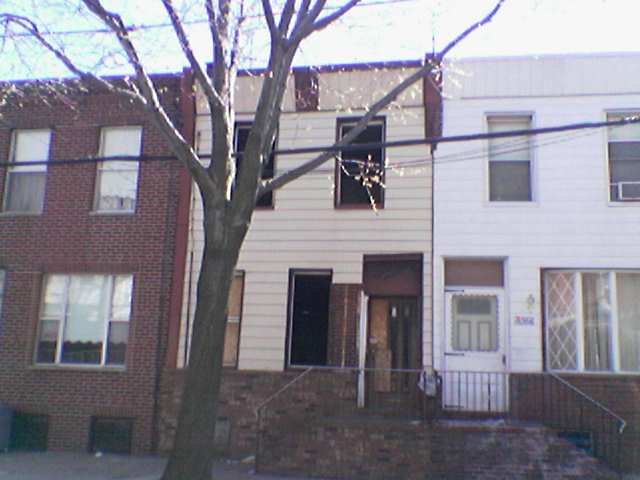
2nd Philadelphia Rehab 3bd / 1ba

Update:
10/5/2005 - Spoke with my partner. The contractor working on this is asking for $2k more to "finish" this. It will take at least $8K to complete this job and he says he will "honor" his word to finish this job. It is hard to believe as this job was supposed to be finished in July! It is obvious that he has given up on this project and has even misappropriated the funds for the heater. Supposedly he is waiting for his "friend" to fix it. There are alot of lessons to be learned here. Right now looking for a new contractor to finish this up.
5/12/2006 - Partner and I have been busy and now we have a reliable but not the best contractor to finish this up. It is a pain but we are looking to sell or rent out for a year and then sell.
12/19/2006 - We have finally made all the necessary repairs. This deal has been a very challenging one due to budget overruns and lack of a good contractor who does a complete job. We needed to hire handyman / laborers to get the job done. There is alot to be learned. We are using one of the top realtors in Philadelphia to market this for 3 months to see if we can snag a good buyer.
9/12/2007 - FINALLY the property sold... BUT at a loss :( Due to many things especially the budget, time, and rip off contractors this was a very painful lesson. It convinces me more to be on top of my game. I was marketing in the various papers in Philadelphia and most of the residents in Philly do not have cash or do not have the credit to close. The cash was the most important part. Right now it is a long arduous thing. I can't believe it is 2 years since we did this.


Tuesday, October 04, 2005
What's An Investor? by billionaire Mark Cuban
I was reading some posts and I journeyed to self made billionaire Mark Cuban. He wrote his observations on what is an investor compared to other types of creating wealth such as a "speculator".
Check his blog:
http://www.blogmaverick.com/entry/1234000660060351/
Check his blog:
http://www.blogmaverick.com/entry/1234000660060351/
Sunday, October 02, 2005
Do You Fear Success Quiz?
Interesting quiz to know if your fear prevents you from succeeding.
http://www.fortune.com/fortune/quizzes/careers/fearsuccess_quiz.html
http://www.fortune.com/fortune/quizzes/careers/fearsuccess_quiz.html
Tuesday, September 27, 2005
Leaving a Legacy - Principles to Live By by Jim Rohn
Leaving a Legacy - Principles to Live By by Jim Rohn
(excerpted from Jim Rohn's Twelfth Pillar of Success: Legacy, Part Two of the Jim Rohn One-Year Success Plan)
You know me, I am a philosopher. I love principles. Yes, actions are great and I talk about them regularly, but the important stuff is what lies underneath--the principles.
Here are what I consider to be the principles that we must commit to if we are to leave the legacy we desire:
1. Life is best lived in service to others.
This doesn't mean that we do not strive for the best for ourselves. It does mean that in all things we serve other people, including our family, co-workers and friends.2. Consider others' interests as important as your own.
Much of the world suffers simply because people consider only their own interests. People are looking out for number one, but the way to leave a legacy is to also look out for others.3. Love your neighbor even if you don't like him.
It is interesting that Jesus told us to love others. But he never tells us to like them. Liking people has to do with emotions. Loving people has to do with actions. And what you will find is that when you love them and do good by them, you will more often than not begin to like them.4. Maintain integrity at all costs.
There are very few things you take to the grave with you. The number one thing is your reputation and good name. When people remember you, you want them to think, "She was the most honest person I knew. What integrity." There are always going to be temptations to cut corners and break your integrity. Do not do it. Do what is right all of the time, no matter what the cost.5. You must risk in order to gain.
In just about every area of life you must risk in order to gain the reward. In love, you must risk rejection in order to ask that person out for the first time. In investing you must place your capital at risk in the market in order to receive the prize of a growing bank account. When we risk, we gain. And when we gain, we have more to leave for others.6. You reap what you sow.
In fact, you always reap more than you sow--you plant a seed and reap a bushel. What you give you get. What you put into the ground then grows out of the ground. If you give love you will receive love. If you give time, you will gain time. It is one of the truest laws of the universe. Decide what you want out of life and then begin to sow it.7. Hard work is never a waste.
No one will say, "It is too bad he was such a good, hard worker." But if you aren't they will surely say, "It's too bad he was so lazy - he could have been so much more!" Hard work will leave a grand legacy. Give it your all on your trip around the earth. You will do a lot of good and leave a terrific legacy.8. Don't give up when you fail.
Imagine what legacies would have never existed if someone had given up. How many thriving businesses would have been shut down if they quit at their first failure? Everyone fails. It is a fact of life. But those who succeed are those who do not give up when they fail. They keep going and build a successful life - and a legacy.9. Don't ever stop in your pursuit of a legacy.
Many people have accomplished tremendous things later on in life. There is never a time to stop in your pursuit of a legacy. Sometimes older people will say, "I am 65. I'll never change." That won't build a great life! No, there is always time to do more and achieve more, to help more and serve more, to teach more and to learn more. Keep going and growing that legacy!These are core principles to live by if you want to become the kind of person who leaves a lasting legacy.
Until next week, let's do something remarkable!
Jim Rohn
Tuesday, September 13, 2005

Tuesday, September 06, 2005
Success is Easy, But So is Neglect by Jim Rohn
Success is Easy, But So is Neglect by Jim Rohn
excerpted from The Challenge to Succeed audio series)
People often ask me how I became successful in that six-year period of time while many of the people I knew did not. The answer is simple: The things I found to be easy to do, they found to be easy not to do. I found it easy to set the goals that could change my life. They found it easy not to. I found it easy to read the books that could affect my thinking and my ideas. They found that easy not to. I found it easy to attend the classes and the seminars, and to get around other successful people. They said it probably really wouldn't matter. If I had to sum it up, I would say what I found to be easy to do, they found to be easy not to do. Six years later, I'm a millionaire and they are all still blaming the economy, the government, and company policies, yet they neglected to do the basic, easy things.
In fact, the primary reason most people are not doing as well as they could and should, can be summed up in a single word: neglect.
It is not the lack of money - banks are full of money. It is not the lack of opportunity - America, and much of the free World, continues to offer the most unprecedented and abundant opportunities in the last six thousand years of recorded history. It is not the lack of books – libraries are full of books - and they are free! It is not the schools - the classrooms are full of good teachers. We have plenty of ministers, leaders, counselors and advisors.
Everything we would ever need to become rich and powerful and sophisticated is within our reach. The major reason that so few take advantage of all that we have is simply, neglect.
Neglect is like an infection. Left unchecked it will spread throughout our entire system of disciplines and eventually lead to a complete breakdown of a potentially joy-filled and prosperous human life.
Not doing the things we know we should do causes us to feel guilty and guilt leads to an erosion of self-confidence. As our self-confidence diminishes, so does the level of our activity. And as our activity diminishes, our results inevitably decline. And as our results suffer, our attitude begins to weaken. And as our attitude begins the slow shift from positive to negative, our self-confidence diminishes even more... and on and on it goes.
So my suggestion is that when giving the choice of "easy to" and "easy not to" that you do not neglect to do the simple, basic, "easy"; but potentially life-changing activities and disciplines.
To Your Success,
Jim Rohn
Reproduced with permission from the Jim Rohn Weekly E-zine. Subscribe at: www.jimrohn.com or send an email with JOIN in the subject to: subscribe@jimrohn.com
Friday, September 02, 2005
Hurricane Relief - What Can I Do About it?
I spent 2 hrs online in the middle of the night instead of doing some work to look at the situation down in the New Orleans area from the wake of Hurriance Katrina. It is what it is. My faith in God has left me to still say God is God and God is in control. At the same time I look into myself ask how I am accountable for what is happening. I have spent time on foxnews.com and cnn.com informing myself. I have prayed and now see that the rescue operations current needs are cash. In that light I have donated. If you are inspired to be accountable with me you can donate or find more information at:
http://www.fema.gov/press/2005/katrinadonations.shtm
http://www.fema.gov/press/2005/katrinadonations.shtm
Thursday, September 01, 2005
1st Deal in Philadelphia
In Fall of 2004, I went to the Tax Deed Sheriff Sale in Philadelphia and bidded on a property in University City in Philadelphia.
How did I find it?
One of my friend's brother works in UPENN and just rode a bike and told me that he would live in the area as it was close to DREXEL UNIVERSITY. It was a shell that was completely boarded up or so I thought.
I went to the sale with a MAB or Maximum Allowable Bid of $27K as my initial comps were about $80K ARV or After Repair Value and thought that with sight unseen it was only about $15K to $20K of work. I did one drive by and it was an interesting area as around the corner was student rentals and even further was a school for the blind and various churches around. After the auction someone told me properties are going for 40K around the area - fixed up! I nearly choked when I heard that.
At the auction, I went head to head with a student who pushed the #s from 18K all the way to about 25K and .. I WON! It was the first bid out of 2 other bids that I made that I won! It was a great feeling and I was shaking after I went to the front to pay it off.
Excitingly we went there and opened the house and to my horror saw that the back extension was torn down with a wide gapping hole. Asking for a quick idea of how much it would be repaired for, a investor told me he can get a crew to do it for $36K.
In the meantime, I had an architect go through to draw plans on rehabbing the property. I have shopped the plans to over several contractors with prices from 45K to 120K !!!! Right now I plan to start rehab with my partner in the next 3 months as summer of 2005 is over but I believe I want to get ready for the spring time.
8/30/2005 - went to Philly with my friend and they are pricing the work out as they are contractors from NYC. I asked a realtor about how much is the value of this property and they said about 110K after fixed up with minimal "wow" factor. Just something clean. This is a big contrast to supposed comps around 40K last year! Talk about bad information.
9/29/2005 - I have taken over several construction bids on this. The range is from 35K to 120K! Suffice to say that one of my friends said it can be done for $50K without landscaping in the back. Another contractor told me if that they can do it they love to see the work done that low! Right now the shell is sitting and appreciating slowly but surely. In the future, I would be able to sell it as a shell but the creative part of me wants to do something for the community so I am still accepting bids. The insurance carrier hasn't gotten back to me on covering this shell.
1/5/2006 - I have been calling various lenders for a acquistion and rehab loan. I visited the house and a few people have taken off the wood and went inside without closing the property up. I am going to get it boarded in a week.
How did I find it?
One of my friend's brother works in UPENN and just rode a bike and told me that he would live in the area as it was close to DREXEL UNIVERSITY. It was a shell that was completely boarded up or so I thought.
I went to the sale with a MAB or Maximum Allowable Bid of $27K as my initial comps were about $80K ARV or After Repair Value and thought that with sight unseen it was only about $15K to $20K of work. I did one drive by and it was an interesting area as around the corner was student rentals and even further was a school for the blind and various churches around. After the auction someone told me properties are going for 40K around the area - fixed up! I nearly choked when I heard that.
At the auction, I went head to head with a student who pushed the #s from 18K all the way to about 25K and .. I WON! It was the first bid out of 2 other bids that I made that I won! It was a great feeling and I was shaking after I went to the front to pay it off.
Excitingly we went there and opened the house and to my horror saw that the back extension was torn down with a wide gapping hole. Asking for a quick idea of how much it would be repaired for, a investor told me he can get a crew to do it for $36K.
In the meantime, I had an architect go through to draw plans on rehabbing the property. I have shopped the plans to over several contractors with prices from 45K to 120K !!!! Right now I plan to start rehab with my partner in the next 3 months as summer of 2005 is over but I believe I want to get ready for the spring time.
8/30/2005 - went to Philly with my friend and they are pricing the work out as they are contractors from NYC. I asked a realtor about how much is the value of this property and they said about 110K after fixed up with minimal "wow" factor. Just something clean. This is a big contrast to supposed comps around 40K last year! Talk about bad information.
9/29/2005 - I have taken over several construction bids on this. The range is from 35K to 120K! Suffice to say that one of my friends said it can be done for $50K without landscaping in the back. Another contractor told me if that they can do it they love to see the work done that low! Right now the shell is sitting and appreciating slowly but surely. In the future, I would be able to sell it as a shell but the creative part of me wants to do something for the community so I am still accepting bids. The insurance carrier hasn't gotten back to me on covering this shell.
1/5/2006 - I have been calling various lenders for a acquistion and rehab loan. I visited the house and a few people have taken off the wood and went inside without closing the property up. I am going to get it boarded in a week.
Tuesday, August 23, 2005
CREATING OPPORTUNITY by Jim Rohn
CREATING OPPORTUNITY
An enterprising person is one who comes across a pile of scrap metal and sees the making of a wonderful sculpture. An enterprising person is one who drives through an old decrepit part of town and sees a new housing development. An enterprising person is one who sees opportunity in all areas of life.
To be enterprising is to keep your eyes open and your mind active. It's to be skilled enough, confident enough, creative enough and disciplined enough to seize opportunities that present themselves...regardless of the economy.
A person with an enterprising attitude says, "Find out what you can before action is taken." Do your homework. Do the research. Be prepared. Be resourceful. Do all you can in preparation of what's to come.
Enterprising people always see the future in the present. Enterprising people always find a way to take advantage of a situation, not be burdened by it. And enterprising people aren't lazy. They don't wait for opportunities to come to them, they go after the opportunities. Enterprise means always finding a way to keep yourself actively working toward your ambition.
Enterprise is two things. The first is creativity. You need creativity to see what's out there and to shape it to your advantage. You need creativity to look at the world a little differently. You need creativity to take a different approach, to be different.
What goes hand-in-hand with the creativity of enterprise is the second requirement: the courage to be creative. You need courage to see things differently, courage to go against the crowd, courage to take a different approach, courage to stand alone if you have to, courage to choose activity over inactivity.
And lastly, being enterprising doesn't just relate to the ability to make money. Being enterprising also means feeling good enough about yourself, having enough self worth to want to seek advantages and opportunities that will make a difference in your future. And by doing so you will increase your confidence, your courage, your creativity and your self-worth - your enterprising nature.
To Your Success,
Jim Rohn
Reproduced with permission from the Jim Rohn Weekly E-zine. Subscribe at: www.jimrohn.com or send an email with JOIN in the subject to: subscribe@jimrohn.com
August Update - What Have I Been Doing?
* Learning whatever on the different corporate entities to shield me from liabilities as I have been doing it as a sole proprietor. I have came down to incorporating as an LLC and it being taxed as a corp (whether S or C).
I received alot of assistance from this thread:
http://dealmakerscafe.com/forum/index.php?act=ST&f=3&t=394
I am also consulting a CPA that I found from a referral.
* Working on getting my 1st rehab done in Philly. The contractor has not met our deadlines and is at the point where he underbidded and is working slower as he is looking for money to complete this project. We had a sticky meeting in which my partner and I are considering looking for someone to complete the work. The work is coming along but just slow. The contractor says he will not make any profit but he is completing it because he said that is what he would do.
* Finding deals in Philly for my contractor friend. I would put them up but I will wait until we are on the way. I want to put examples on what is going on rather than possibilities.
* Talking to my Great Life Buddies - we are living :) Things have been good and seeing them living is great. We have a special unsaid connection but for the most part it is a great memory in my life. We are all living and growing. Some are more happy and some of us are so busy that we don't have time to know if we are happy or not.
* Enjoying the NYC summer as I met one of my goals in watching the Shakespeare in the Park. It is really great! I am going to miss this summer.
I received alot of assistance from this thread:
http://dealmakerscafe.com/forum/index.php?act=ST&f=3&t=394
I am also consulting a CPA that I found from a referral.
* Working on getting my 1st rehab done in Philly. The contractor has not met our deadlines and is at the point where he underbidded and is working slower as he is looking for money to complete this project. We had a sticky meeting in which my partner and I are considering looking for someone to complete the work. The work is coming along but just slow. The contractor says he will not make any profit but he is completing it because he said that is what he would do.
* Finding deals in Philly for my contractor friend. I would put them up but I will wait until we are on the way. I want to put examples on what is going on rather than possibilities.
* Talking to my Great Life Buddies - we are living :) Things have been good and seeing them living is great. We have a special unsaid connection but for the most part it is a great memory in my life. We are all living and growing. Some are more happy and some of us are so busy that we don't have time to know if we are happy or not.
* Enjoying the NYC summer as I met one of my goals in watching the Shakespeare in the Park. It is really great! I am going to miss this summer.
Tuesday, August 09, 2005
SUPER SIZE ME
SUPER SIZE ME
Thought provoking documentary on the way modern man eats. After watching this film, I had to put down my double cheeseburger from McDonald's! Here are some factoids from the website:
* each day, 1 in 4 Americans visits a fast food restaurant
* In 1972, we spent 3 billion a year on fast food - today we spend more than 110 billion
* McDonald's feeds more than 46 million people a day - more than the entire population of Spain
* French fries are the most eaten vegetable in America.
* You would have to walk for seven hours straight to burn off a Super Sized Coke, fry and Big Mac.
* In the U.S., we eat more than 1,000,000 animals an hour
* 60 % of all Americans are either overweight or obese
* One in every three children born in the year 2000 will develop diabetes in their lifetime
* Left unabated, obesity will surpass smoking as the leading cause of preventable death in America
* Obesity has been linked to: Hypertension, Coronary Heart Disease, Adult Onset Diabetes, Stroke, Gall Bladder Disease, Osteoarthritis, Sleep Apnea, Respiratory Problems, Endometrial, Breast, Prostate and Colon Cancers, Dyslipidemia, steatohepatitis, insulin resistance, breathlessness, Asthma, Hyperuricaemia, reproductive hormone abnormalities, polycystic ovarian syndrome, impaired fertility and lower back pain
* The average child sees 10,000 TV advertisements per year
* Only seven items on McDonald's entire menu contain no sugar
* Willard Scott was the first Ronald McDonald - he was fired for being too fat
* McDonald's distributes more toys per year than Toys-R-Us
* Diabetes will cut 17-27 years off your life
* McDonald's: "Any processing our foods undergo make them more dangerous than unprocessed foods"
* The World Health Organization has declared obesity a global epidemic
* Eating fast food may be dangerous to your health McDonald's calls people who eat a lot of their food "Heavy Users"
* McDonald's operates more than 30,000 restaurants in more then 100 countries on 6 continents
* Before most children can speak they can recognize McDonald's
* Surgeon General David Satcher: "Fast food is a major contributor to the obesity epidemic"
* Most nutritionists recommend not eating fast food more than once a month
* 40% of American meals are eaten outside the home
* McDonald's represents 43% of total U.S. fast food mark
Thought provoking documentary on the way modern man eats. After watching this film, I had to put down my double cheeseburger from McDonald's! Here are some factoids from the website:
* each day, 1 in 4 Americans visits a fast food restaurant
* In 1972, we spent 3 billion a year on fast food - today we spend more than 110 billion
* McDonald's feeds more than 46 million people a day - more than the entire population of Spain
* French fries are the most eaten vegetable in America.
* You would have to walk for seven hours straight to burn off a Super Sized Coke, fry and Big Mac.
* In the U.S., we eat more than 1,000,000 animals an hour
* 60 % of all Americans are either overweight or obese
* One in every three children born in the year 2000 will develop diabetes in their lifetime
* Left unabated, obesity will surpass smoking as the leading cause of preventable death in America
* Obesity has been linked to: Hypertension, Coronary Heart Disease, Adult Onset Diabetes, Stroke, Gall Bladder Disease, Osteoarthritis, Sleep Apnea, Respiratory Problems, Endometrial, Breast, Prostate and Colon Cancers, Dyslipidemia, steatohepatitis, insulin resistance, breathlessness, Asthma, Hyperuricaemia, reproductive hormone abnormalities, polycystic ovarian syndrome, impaired fertility and lower back pain
* The average child sees 10,000 TV advertisements per year
* Only seven items on McDonald's entire menu contain no sugar
* Willard Scott was the first Ronald McDonald - he was fired for being too fat
* McDonald's distributes more toys per year than Toys-R-Us
* Diabetes will cut 17-27 years off your life
* McDonald's: "Any processing our foods undergo make them more dangerous than unprocessed foods"
* The World Health Organization has declared obesity a global epidemic
* Eating fast food may be dangerous to your health McDonald's calls people who eat a lot of their food "Heavy Users"
* McDonald's operates more than 30,000 restaurants in more then 100 countries on 6 continents
* Before most children can speak they can recognize McDonald's
* Surgeon General David Satcher: "Fast food is a major contributor to the obesity epidemic"
* Most nutritionists recommend not eating fast food more than once a month
* 40% of American meals are eaten outside the home
* McDonald's represents 43% of total U.S. fast food mark
Subscribe to:
Posts (Atom)